Previous Year Papers vs Mock Tests: Which Helps You Score Higher?
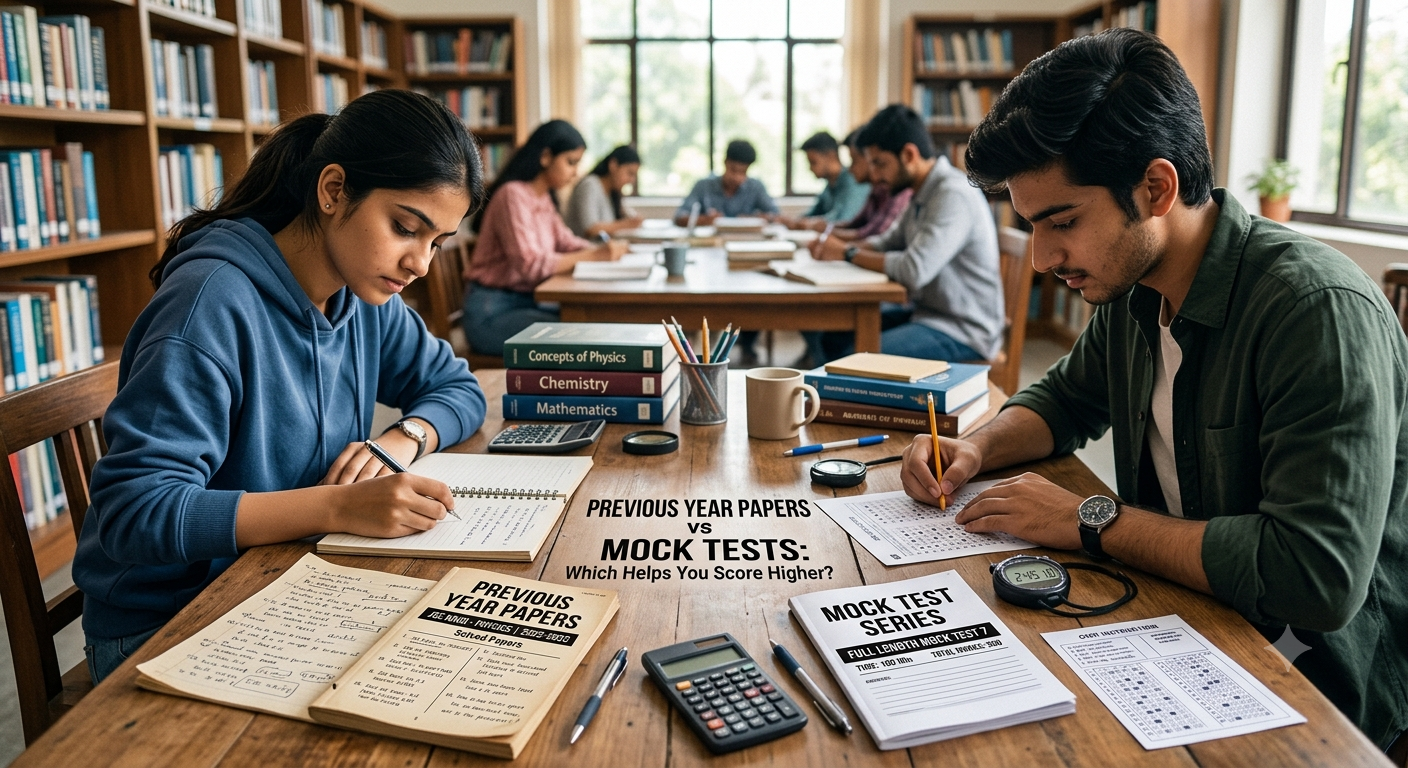
Ask ten NEET or JEE toppers how they cracked their exam, and you'll probably get ten different answers about their daily routine. But bring up practice material, and almost everyone circles back to the same two things: previous year papers and mock tests. The real question students keep asking is which one actually moves the needle on their score.
The honest answer? It depends on where you are in your prep journey.
What Previous Year Papers Really Teach You
There's something oddly comforting about sitting down with an actual NEET or JEE paper from 2019 or 2021. It's not a simulation — it's the real thing, questions that real students faced under real exam pressure. Solving these papers gives you a direct sense of what examiners consider important, how concepts get twisted into tricky questions, and which topics show up year after year.
Also Read: Can a Last-Minute Crash Course Really Boost Your NEET/JEE Rank?
For IIT aspirants especially, JEE Advanced papers reveal something mock tests often can't replicate — the sheer unpredictability of question framing. You start noticing patterns: certain chapters in Physics almost always carry higher weightage, or Organic Chemistry questions tend to combine two concepts instead of testing them separately. That pattern recognition is gold, and it only comes from working through genuine papers, not manufactured ones.
Where Mock Tests Pull Ahead
Mock tests, on the other hand, aren't about nostalgia for old papers — they're about building stamina and simulating pressure. A full-length NEET mock test forces you to manage three hours of sustained focus. A JEE Main mock test trains your brain to switch between Physics, Chemistry, and Maths without losing rhythm.
This is where mock tests genuinely outperform previous year papers: they're customizable to your weak areas, updated to reflect the latest exam pattern, and available in far greater volume. If you've already exhausted ten years of previous papers, mock tests keep the practice flowing without repetition.
So, Which One Actually Helps You Score Higher?
Honestly, framing this as a competition misses the point. Previous year papers build your foundation — they show you what the exam actually looks like. Mock tests build your execution — they train you to perform under timed, exam-like conditions.
Also Read: How Do Test Series Help You Beat Exam-Day Anxiety in NEET & JEE?
A smart approach most successful NEET and JEE aspirants swear by: start your prep cycle with previous year papers to understand the syllabus and question style, then shift toward mock tests in the final two to three months to build speed and accuracy. Many IIT and NEET toppers say the combination, not the choice between the two, is what pushed their scores up.
If you're forced to pick just one in your last month, mock tests probably edge ahead simply because of the pressure-testing element — real exams punish hesitation, and mocks train you out of it.
The Bottom Line
Don't treat this as an either-or decision. Previous year papers tell you what to expect. Mock tests train you to handle it when it actually happens. Use both, track your performance honestly after each attempt, and let your weak areas — not a blog post — decide where you spend more time.
Also Read: Is a Combined NEET-JEE Foundation Course Worth It in Class 11?