How Important Are Previous Year Question Papers for NEET and JEE Prep?
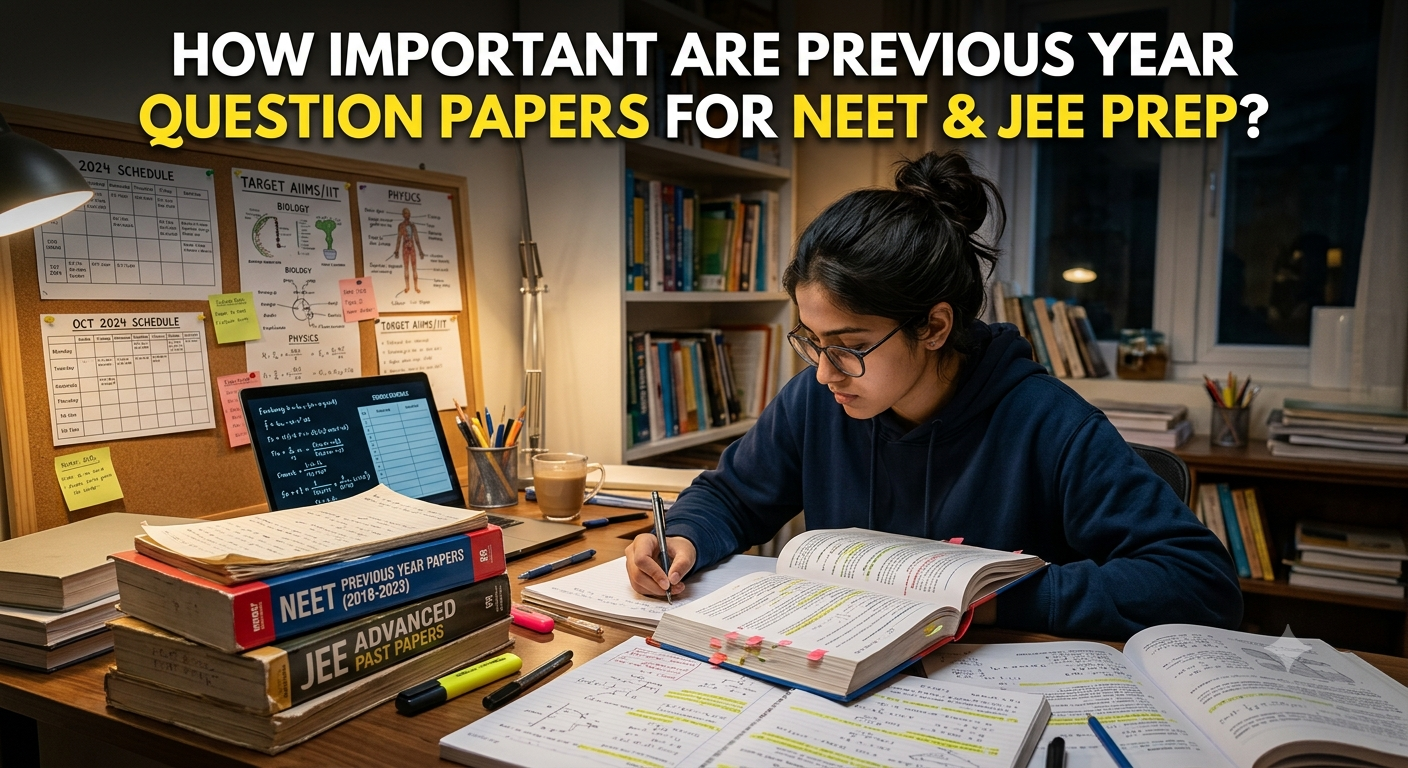
Ask any topper how they cracked NEET or JEE, and somewhere in their answer you'll hear the same line: "I solved a ton of previous year papers." It's not a coincidence. There's something about sitting with an actual paper from 2019 or 2021, timer running, that no textbook chapter can replicate.
But why exactly do PYQs matter so much? Let's break it down.
They Show You What Examiners Actually Value
Textbooks cover everything. Exams don't test everything. Previous year papers bridge that gap by showing you which concepts get asked again and again, which ones show up in disguised forms, and which chapters barely make an appearance despite being lengthy in your syllabus. Once you've solved five or six years of papers, you start noticing patterns — a particular type of mechanics problem in JEE, or a repeated NCERT line-based question in NEET Biology. That pattern recognition is worth more than another round of passive reading.
They Train You for Exam-Day Pressure
There's a difference between knowing a concept and applying it under a two-hour clock with negative marking staring at you. PYQs are the closest thing to a real exam simulation you can get, short of an actual mock test. Students who've attempted at least a decade's worth of papers tend to handle time pressure far better, simply because they've faced that specific kind of stress before.
They Reveal Your Weak Zones Honestly
Mock tests are useful, but PYQs give you something extra — a benchmark. You can literally see how the difficulty level has shifted over the years, and where you personally struggle compared to what the exam expects. If you're consistently missing questions from a certain chapter across multiple years' papers, that's not bad luck. That's a clear signal.
Where Do You Even Start?
This is usually where students get stuck. Do you attempt papers topic-wise or full-length? How far back should you go? What's the right way to review mistakes without just glancing at the answer key and moving on? These are exactly the kind of doubts that structured guidance solves faster than trial and error.
This is where good mentorship makes a visible difference. Institutes offering NEET classes in Bhopal and JEE classes in Bhopal typically build PYQ practice directly into their teaching schedule — not as an afterthought closer to the exam, but woven into weekly revision from early on. That kind of structured exposure to previous year papers, paired with proper doubt-solving, tends to help students far more than solving papers in isolation at home.
The Bottom Line
Previous year papers aren't a magic shortcut, but they're close to essential. They tell you what to expect, where you stand, and what needs fixing — all in one exercise. If you're preparing for NEET or JEE and haven't made PYQs a regular part of your routine yet, that's probably the single easiest change you can make to your study plan this month.